
- A wet sprinkler system freezes solid over a freezer and delivers no water when it matters.
- Dry-pipe and double-interlock preaction keep liquid water out of the cold space until a head opens.
- PIR and PUR sandwich-panel cores are combustible and let fire spread hidden behind the steel face.
- Aspirating smoke detection with a warm sampling unit beats point detectors in a -25C room.
- Confirm the sprinkler system type against NFPA 13 and the UAE code before anything else.
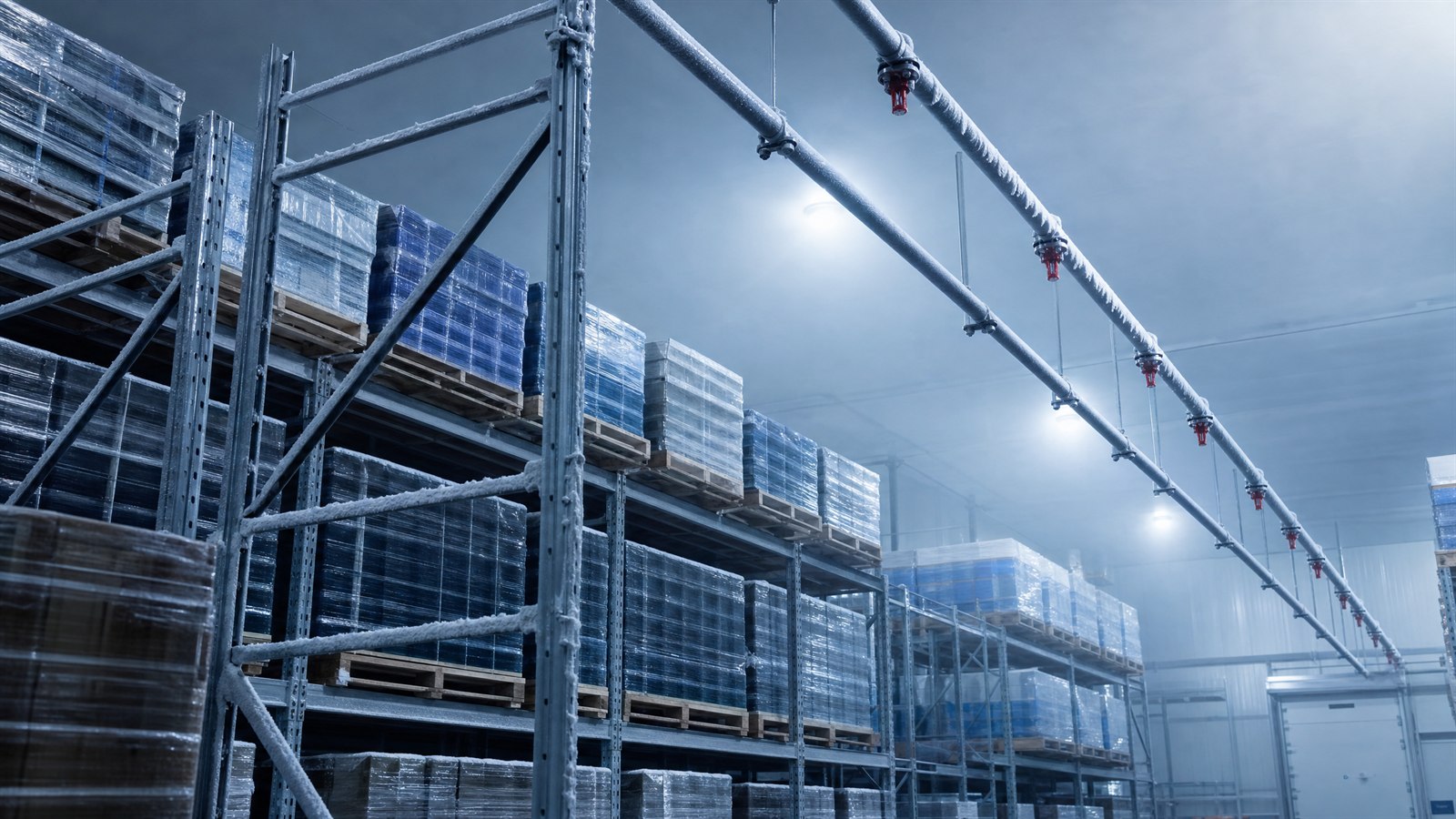
A sprinkler pipe frozen solid over a -25C freezer will not put out anything. It is a steel rod packed with ice, hung above pallets of frozen product, doing nothing on the one day it has to work.
That single failure mode is the whole story. It is also why cold storage fire protection Dubai lives or dies on one early call: which sprinkler system goes in. Get that decision wrong and the panels, the detectors, and the pumps all sit behind a network that cannot deliver water.
Why Water in the Pipe Is the Enemy
A standard wet system keeps water sitting in the pipework, charged at every head. That is exactly what you want in an office. In a blast freezer at -25C it is a hazard. Water freezes, ice expands, fittings split, and the first sign of trouble is often a flood when the room warms up for maintenance — not a fire at all.
So the frozen store needs a system that keeps liquid water out of the cold space until the moment it is called for. Three routes do that. They are not equal.
Cold Storage Fire Protection Dubai Comes Down to the Sprinkler
Under NFPA 13 (https://www.nfpa.org), the Standard for the Installation of Sprinkler Systems, a freezer has three recognised paths.
Dry-pipe holds pressurised air or nitrogen in the pipes. The water waits behind a dry-pipe valve in a heated valve room. A head opens, the air bleeds off, the valve trips, and water flows. Simple and long proven. The catch is delay: water has to travel from the valve room before it reaches the fire, so the design has to account for that trip time.
Double-interlock preaction goes further. Water enters the pipe only when two independent things happen at once: a detector fires and a sprinkler head opens. Nothing floods the freezer on a knocked head or a single false trip. For most Dubai freezers this is the system I steer clients toward, because an accidental discharge into a -25C room is its own expensive disaster, and the ice cleanup can shut a store for days.
Antifreeze systems use a glycol or glycerine solution to stop the water freezing. NFPA 13 tightened the rules on these after flammability testing, and they now suit short, limited runs rather than a full freezer warehouse. Treat them as an edge case, not a plan.
Here is the stance, plainly: in a freezer the sprinkler type is the whole ballgame. The trade-off with double-interlock is real. It is slower to deliver and it leans on detection staying healthy, so the detection maintenance is no longer optional.
| System | Water in the cold space? | Main trade-off |
|---|---|---|
| Wet pipe | Yes, always | Freezes. Not for freezers. |
| Dry pipe | No, until a head opens | Delivery delay after the valve trips |
| Double-interlock preaction | No, needs detection and a head | Slower, detection-dependent |
| Antifreeze | Yes, treated liquid | Small systems only |
QSERV designs and maintains dry-pipe and double-interlock preaction systems for Dubai cold stores under DCD approval.
The Panels Are Fuel, Not Just Insulation
A cold store is built almost entirely from insulated sandwich panels: two steel skins over a foam core. The core is usually PIR (polyisocyanurate) or older PUR (polyurethane). Both burn. PIR chars and holds up better; PUR spreads faster and drips flaming material.
The danger is that it is hidden. Fire can run inside the panel core, behind the steel face, where sprinkler spray cannot reach and where nobody can see it. By the time it breaks through, it has already travelled. The UAE Fire and Life Safety Code of Practice (https://www.dcd.gov.ae) sets out how sandwich-panel cores and their joints have to perform, and Dubai Civil Defence (https://www.dcd.gov.ae) checks it on inspection. Panel joints, service penetrations, and the fire-stopping around them are not a finishing detail. In a cold store they are half the fight.
In a freezer, the building itself is part of the fuel load.
Detection When the Air Sits at -25C
Cold defeats ordinary detection. Point smoke detectors frost over, condensation forms as loading doors cycle, and temperatures drop below the rating of standard heads and sensors. A detector fogged with ice is not protecting anyone.
Aspirating smoke detection earns its place here. It draws air continuously through a sampling pipe network back to a detector unit kept in a warmer space, so the sensitive electronics never sit in the freezer. It picks up smoke early, before a slow smoulder in a panel void becomes an open fire. Pair it with cold-rated sprinkler heads and the detection side holds up in temperatures that would blind a normal system.
In practice, on cold-store handovers around Dubai Investments Park we have opened dry-pipe auxiliary drains and pulled out a plug of condensation ice that nobody had scheduled to clear. Small thing. It is enough to stop the whole system tripping cleanly when it counts.
Where This Leaves You
Pick the sprinkler system first. Everything else in the freezer warehouse fire safety design follows from that one choice. If you run a chilled or frozen store, get the system type confirmed against NFPA 13 and the UAE code before anyone argues about head counts or pump sizing.
For a review of the system you already have, or a design for one going in, QSERV's fire protection services cover cold-store sprinkler design, preaction valves, and cold-rated detection under DCD sign-off. For the wider picture, read our guides on warehouse fire protection and fire sprinkler system maintenance.
Book a site survey before your next DCD renewal, not after a claim.


