
A fire sprinkler system has one job. It must send water to the right heads at the right pressure on the worst day. In Dubai, you cannot just hope it will. You have to prove it. You prove it with checks under NFPA 25. And you keep the proof on file for Dubai Civil Defence (DCD).
This guide keeps it simple. What gets checked. How often. Why systems fail. And what DCD wants to see.
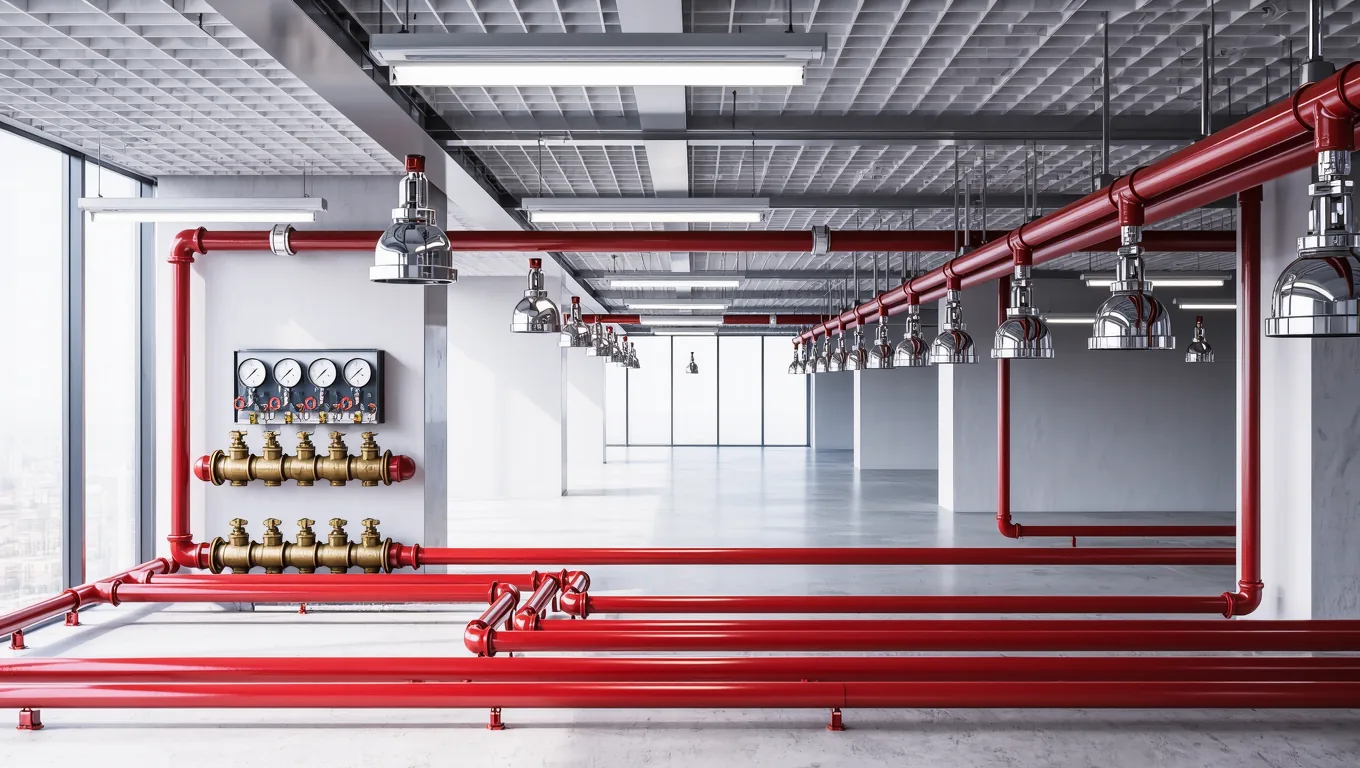
What NFPA 25 Asks For
NFPA 25 is the rule DCD uses for water systems. It sets the smallest set of checks you must do. The idea is simple. A sprinkler sits still for years. So you test it on a plan. That way you know it still works.
The checks run on a cycle:
- Weekly or monthly: valves open, gauges normal, pump and tank ready.
- Quarterly: alarm devices, flow switches, and a main drain test.
- Yearly: a full check of heads and pipes, plus a flow test.
Your exact plan comes from the building's fire strategy. Treat the list above as the normal pattern, not a fixed rule.
The Valve Is the Big Risk
Most sprinkler faults come down to one thing. A closed valve. If a valve is shut, the heads above it get no water. Yet the system can look fine.
So valves get the most care. They should be locked open or watched by a switch. The switch tells the fire panel the moment a valve starts to close. A check makes sure that switch works. It makes sure the valve is open. And it makes sure no one has chained it shut.
The Main Drain Test
This test is quick but smart. The tech opens the main drain. Water flows. He writes down the pressure. Then he shuts it.
Next he compares it to the building's normal reading. A small drop is fine. A big drop is a warning. It often means a valve is part-closed upstream. Or the supply is blocked. Either way, you found the fault before a fire did. The reading goes in the logbook.
Heads, Pipes, and Gauges
Sprinkler heads are simple. But they fail in set ways. A check looks for:
- Heads painted over during a paint job.
- Heads blocked by stock or a low ceiling.
- Rust, leaks, or damage on the pipes.
- Dust and grease caked on the head.
Gauges matter too. A gauge stuck at the wrong number hides the real pressure. NFPA 25 says to check gauges and swap them on a set plan.
Warehouses Need Extra Care
Warehouse sprinklers are a special case. The design is built around the goods and how high they are stacked. Change the storage and you can change the risk.
In zones like Al Quoz, DIP, and Jebel Ali, the same faults show up. Stock stacked too close to the heads. New racks that block the spray. Mezzanines added with no extra cover. A warehouse fire safety review should check all of this. It should ask one question. Does the system still fit how the space is used now?
Sprinklers Do Not Work Alone
A sprinkler is one part of a water network. It needs the fire pump. It needs the tank, the valves, and the alarm link. Service it on its own and you miss how the parts work as a team.
So sprinkler care fits best inside a fire systems AMC. One firm handles the pump, sprinklers, hose reels, and alarm. They keep one set of records. They get you ready for DCD renewal. It also makes the yearly fire fighting AMC much easier to check.
Keep the Records
A working system can still fail a check. How? Missing paperwork. DCD wants dated reports. It wants test results, drain readings, and defect notes. It wants proof that faults were fixed. A working sprinkler with no logbook is treated as unproven.
So every visit should leave a clear report. That report is the proof. It shows the system was kept ready, not just fitted once and left.
Frequently Asked Questions
Q: How often should fire sprinklers be checked in Dubai?
NFPA 25 uses a cycle. Valves and gauges are checked weekly or monthly. Alarm devices and the main drain are tested every quarter. A full check and flow test happen once a year. Most Dubai buildings fold these into a quarterly fire systems AMC. The yearly test goes on a set date.
Q: What is a main drain test?
It is a quick flow test. The tech opens the main drain. He notes the pressure. Then he shuts it. A big drop from the normal reading points to a part-closed valve or a blocked supply. It is a fast way to check that water can still reach the heads. The result goes in the logbook.
Q: Why do sprinkler systems fail a DCD check?
The usual causes are simple. A closed or locked valve. Painted-over heads. Heads blocked by stock. Rusty pipes. Faulty gauges. Missing records. Most are easy to avoid with a service plan and a quick in-house check between visits.
Q: Can sprinkler care be part of a fire systems AMC?
Yes. And it usually should be. Sprinklers rely on the pump, valves, and alarm link. Service them together and you get a cleaner record. QSERV covers sprinkler checks, valve and gauge checks, and the yearly flow test inside a fire systems AMC for Dubai buildings.
The 2026 edition of NFPA 25 adds tasks this routine does not contain, including annual internal valve inspection. See NFPA 25 2026.
Explore the Sprinkler Maintenance Cluster
Each page below goes deeper on one part of Dubai sprinkler maintenance.
For broader services, see QSERV's Fire Systems AMC Dubai page.


