
- Combustible ACP is restricted under the UAE Fire and Life Safety Code of Practice; the risk lives in the panel core, not the aluminium.
- Existing buildings are not force-stripped, but any facade replacement, refurbishment, or repair pulls the work under current non-combustible and certification rules.
- A facade fire risk survey grades your cladding and drives the decision: remediate now, remediate on a schedule, or manage and monitor with documentation.
- Fire-rated facade materials need a Dubai-specific certificate of conformance, not just a foreign test report.
- For a high-risk polyethylene-core facade, planned phased remediation usually beats waiting once cost, insurance, and safety are weighed together.
A 40-storey tower in Dubai Marina can hold decades of safe occupancy behind a facade that fails in minutes. The panels look solid. Behind that aluminium skin sits a core, and if the core is plain polyethylene, a single balcony fire can run up the outside of the building faster than the alarm reaches the top floors. That gap between how a facade looks and how it burns is why cladding fire compliance Dubai sits near the top of every building owner's risk file.
The rules did not appear overnight, and they do not treat every building the same. Knowing which category yours falls into is the whole game.
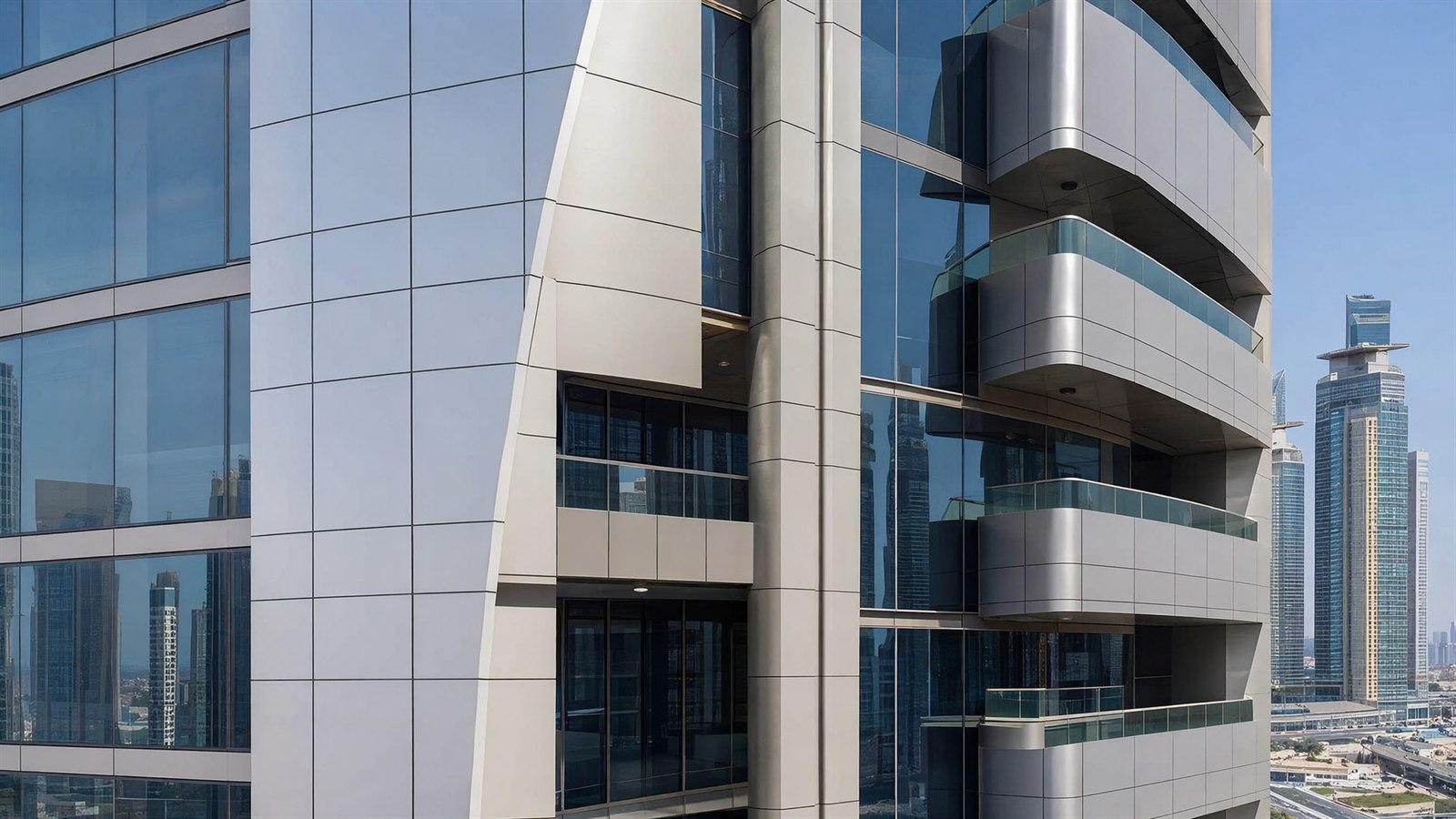
Why the core, not the panel, is the real risk
Aluminium composite panel is two thin sheets of aluminium bonded either side of a core. The metal is not the hazard. The core is.
Older facades used a plain polyethylene core: cheap, light, and effectively solid fuel once it gets hot. Fire-retardant and mineral-filled non-combustible cores changed that maths, but plenty of towers built before the rules tightened still wear the older material.
The failures that made global headlines shared one pattern. A fire escapes a window or balcony, catches the external skin, and the facade carries flame straight up past every compartment line the interior was designed around.
This is not a theoretical worry in the UAE. Authorities have pushed facade replacement drives on residential towers flagged with combustible panels, and some owners have stripped the cladding voluntarily rather than keep carrying the exposure. A facade survey exists to tell you which side of that line your building is on.
What cladding fire compliance Dubai requires now
The governing document is the UAE Fire and Life Safety Code of Practice, which Dubai Civil Defence maintains as a living text. The 2018 edition carried the heavy facade provisions; the 2024 update sharpened material certification and whole-system testing.
For an owner, three points do most of the work.
Tested systems. New facades and major facade works must use non-combustible systems proven as a complete assembly, not judged one panel at a time.
Local certification. Fire-rated materials increasingly need a Dubai-specific certificate of conformance from a Civil Defence-authorised body. A foreign test report on its own no longer settles the question.
Licensed hands. The firms that design, supply and fit the external cladding must be registered and licensed for that work.
QSERV is DCD-approved and can survey your ACP cladding, grade the risk, and stage any remediation before your next Civil Defence renewal.
The existing-building evaluation route
Here is the part owners of older towers actually ask about, so let me be plain.
The code does not order every existing building to tear off its facade. An older tower can keep a legacy building envelope as long as it is maintained, inspected, and shown to be safe. What changes the picture is work: replace panels, run a major refurbishment, or repair a damaged section, and the new material and the company fitting it must meet current fire and life safety requirements.
Short of that trigger, the sensible route is assessment. A facade fire risk survey identifies the panel type and core, maps where combustible material sits relative to windows and escape routes, checks the cavity barriers and fire stopping behind the skin, and grades the result. That grade drives the decision: remediate now, remediate on a schedule, or manage and monitor with a documented case kept on file for the authority.
In practice, the call we get most is from an owner halfway through a refurbishment whose panels have just been rejected at approval. By then the scaffold is up and the budget is fixed. A survey at design stage would have caught it.
A facade that looks fine and a facade that is certified safe are two different claims. Only one of them survives an inspection.QSERV compliance team
Retrofit or wait and see
My stance is not neutral. If a survey turns up a polyethylene-core facade on an occupied tower, treat remediation as a matter of when, not if, and put it on a planned schedule rather than letting an incident set the timeline for you.
The trade-off is real, and it is money. Full recladding is one of the largest single costs an owner will ever carry, and it disrupts tenants while it runs. Non-combustible systems cost more than the composite panels they replace, and a high facade means access equipment on top of the material bill.
Set that against the other column. Insurance that can be loaded or refused over known combustible cladding. A resale discount buyers now apply to unremediated towers. And the safety exposure itself, which no discount ever offsets. Measured over the life of the building, planned remediation is usually the cheaper and calmer number. Phasing it floor by floor or elevation by elevation keeps the cash flow survivable.
Where to start
Do three things this quarter. Get the facade identified, panel type and core, by someone qualified to open it up and check rather than guess from the ground. Confirm any fire-rated material you already hold carries current, Dubai-issued certification. And if a refurbishment is on the horizon, price the certified facade into the design, not the change order.
For the wider rulebook, read our guide to the UAE fire code 2024 update and the broader picture in fire safety compliance in Dubai. When you want the facade checked and the gaps closed before renewal, QSERV's DCD-approved fire and MEP services team can run the survey and stage the remediation.


