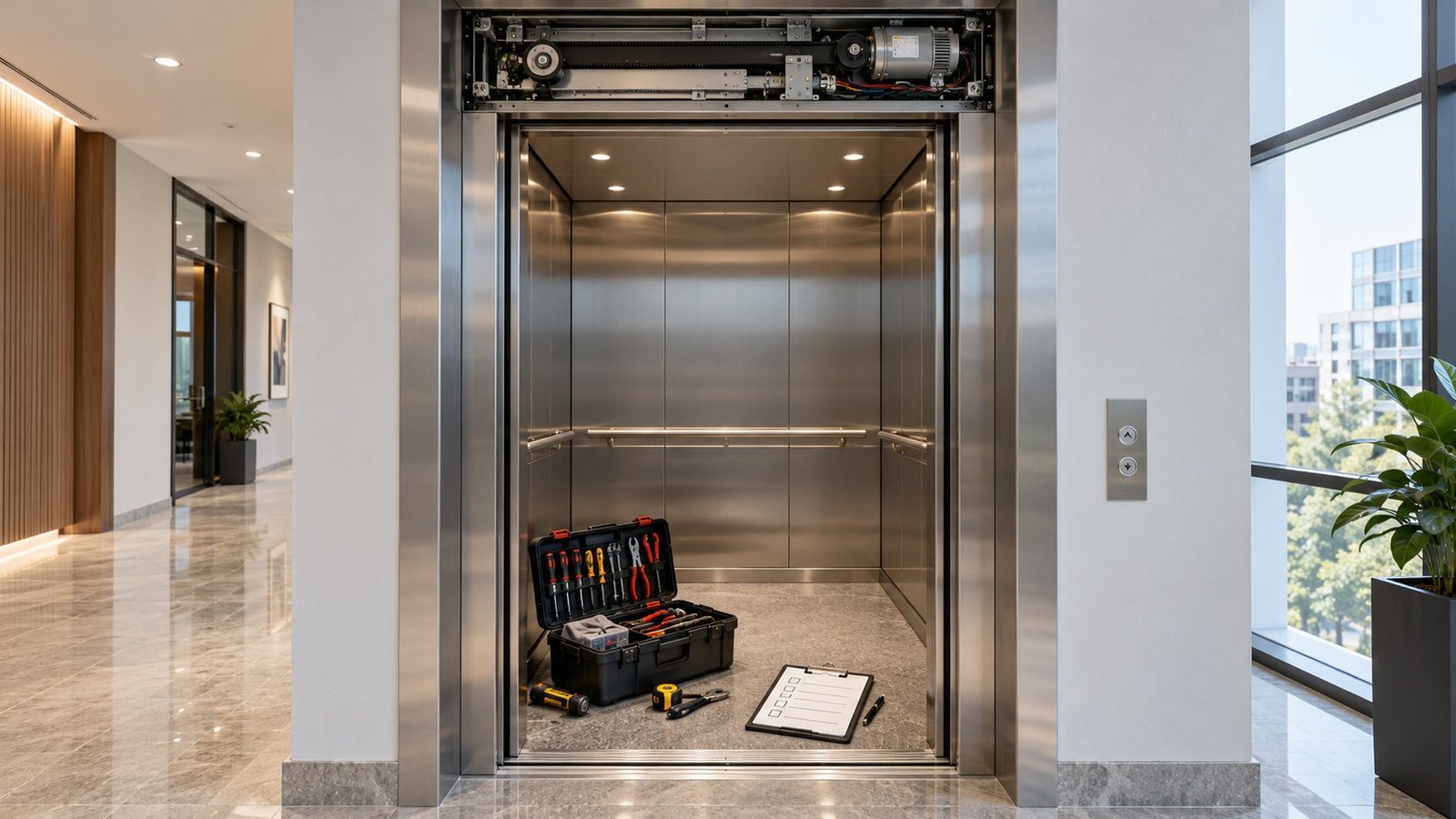
A passenger lift maintenance checklist turns a lift contract into specific tasks at set intervals. Without one, owners cannot tell whether brakes, doors and ropes are actually being checked properly. The intervals should come from the lift maker's maintenance instructions, adjusted for how hard the lift works. This guide covers passenger lifts in towers; villa, goods and escalator checklists differ.
It draws on Mitsubishi Electric's published maintenance manuals, Schindler's owner checklist and the EN 13015 standard for maintenance instructions. It separates what building staff can check from what only a lift technician should do. It also sets out the yearly brake checks that matter most for passenger safety. Finally, it explains how owners should use the checklist inside an AMC.
What should a passenger lift maintenance checklist cover?
A passenger lift checklist should cover doors, brakes, ropes, safety gear, controls, fixtures and the alarm. Each item needs a task, a standard and an interval, not just a tick box. The European standard EN 13015 sets rules for the maintenance instructions supplied with new lifts.
Those instructions should form the backbone of any checklist your contractor actually uses. Mitsubishi Electric's manuals also say heavier use may need more frequent checks than the standard intervals. A busy office lift may therefore need a tighter schedule than a quiet residential one.
Quick Answer
A passenger lift checklist should cover doors, brakes, ropes, safety gear, controls, fixtures and the alarm, each with a task and interval. Heavier use can justify more frequent checks too.
What can building staff check daily or weekly?
Building staff can check that doors open and close smoothly and that door panels show no new damage. Schindler's owner checklist adds removing debris from door sills and watching for water on floors. Staff should also report burned-out lights and damaged or poorly working buttons.
The same checklist reminds owners to confirm the cab emergency phone connects to the rescue provider. These checks need no tools and should never involve opening landing doors or entering the shaft. Anything unusual should go to the lift contractor, not to in-house maintenance staff.
Quick Answer
Staff can check door operation and damage, sill debris, water on floors, lighting, buttons and the emergency phone. They must never open landing doors or enter the lift shaft themselves.
What do technicians check at shorter intervals?
Technicians check door items most often, with Mitsubishi Electric's door manual setting intervals as short as one to three months. Checks cover belts, pulleys, door hangers and shoes, interlocking ropes, door closers and switches. A key test confirms the lift cannot start while a door is open.
Suspension ropes need regular checks for broken wires, wear and tension, as our rope replacement guide explains. Brake operation needs visual checks at intervals under a year, more often for busy lifts. The car's remote alarm also needs testing, alongside its automatic self-checks.
Quick Answer
Technicians check door items as often as every one to three months, including the test that the lift cannot start with a door open. Ropes, brakes and alarms come next.
What belongs in the yearly lift checks?
Yearly checks should cover brake coil stroke, lining clearance and the torque holding a stationary car. Mitsubishi Electric sets all three at a standard interval of one year for its gearless machines. These checks matter because the brake is what holds the car at a floor.
Brake pad wear also needs measuring against the maker's thickness standard. Mitsubishi Electric's pad standard has one value meaning replace within a year and another meaning replace immediately. It also asks technicians to compare wear with the previous inspection, so the trend is visible.
Quick Answer
Yearly checks cover brake coil stroke, lining clearance and holding torque, set at one year by Mitsubishi Electric. Pad wear is checked against thickness limits and the last visit's reading.
How should owners use the checklist?
Owners should attach the checklist to the AMC so each task and interval becomes a contract deliverable. Visit reports should show which checklist items were done, the readings taken and any defects found. Comparing reports shows whether wear items like brake pads and ropes are nearing replacement.
Routine maintenance is separate from periodic third-party inspection, which our elevator third-party inspection guide covers in detail. Mitsubishi Electric also notes that lifts deteriorate with long use even when maintained properly. Older lifts therefore need a component replacement plan alongside the routine checklist.
Quick Answer
Attach the checklist to the AMC, require reports showing tasks, readings and defects, and track wear items over time. Third-party inspection and replacement planning sit alongside maintenance as separate tasks.
Frequently Asked Questions
How often should a passenger lift be serviced?
Can building staff do any lift maintenance?
What is the most important yearly lift check?
Does the checklist replace third-party inspection?
Should the lift emergency phone be tested?
When do lift brake pads need replacing?
Are villa lift checklists different?
Why do older lifts need more than a checklist?
What should a lift maintenance report include?
Where do the checklist intervals come from?
Main Takeaways
A passenger lift checklist should cover doors, brakes, ropes, safety gear, controls, fixtures and the alarm, each with a task and interval. Building staff should handle simple visual checks only. Mitsubishi Electric sets door items from one to twenty-four months and key brake checks at one year. Attach the checklist to the AMC and track wear items across every visit.
Your next step for a passenger lift checklist
A good passenger lift checklist turns vague maintenance promises into named tasks with intervals and standards. Door items deserve the most frequent attention, and brakes need careful, measured yearly checks. Ropes and alarms complete the safety picture, while trained building staff cover simple visual checks. Used properly, the checklist becomes the backbone of every lift AMC and every visit report.
Ask your contractor for the maker's maintenance instructions and the checklist used at each maintenance visit. Compare it with the items in this guide and add anything missing to the next AMC. Our annual lift maintenance contract guide explains the wider contract terms and governing standards. QSERV's elevator AMC team can review your current lift checklist, visit reports and records.
Sources & References
- Mitsubishi Electric Building Solutions: Maintenance manual for brake of gearless traction machine with permanent magnet motor (D55005-B), January 2026
- Mitsubishi Electric Building Solutions: Remaining thickness standard for brake pad of traction machine (D55011), March 2022
- Mitsubishi Electric Building Solutions: Maintenance manual for elevator door operators (D55007-A), July 2026
- Mitsubishi Electric Building Solutions: To customers who have used Mitsubishi elevators and escalators for a long time, 8 September 2023
- Schindler: Elevator 101 preventative maintenance checklist, accessed 23 October 2026
- BSI: EN 13015 Maintenance for lifts and escalators, rules for maintenance instructions, accessed 23 October 2026
- Malta Competition and Consumer Affairs Authority: Emergency alarm system (auto dialer), EN 81-28, accessed 23 October 2026


