
A fire can grow past an extinguisher. Then the building's water network takes over. Fire hydrants feed the brigade's hoses. Hose reels let people fight a small fire. Landing valves give crews a link on each floor. All three only help if they work. And in Dubai, that gets checked.
This guide keeps it simple. How hydrants, landing valves, and hose reels are serviced. The tests. The pressures. And what Dubai Civil Defence (DCD) wants on file.
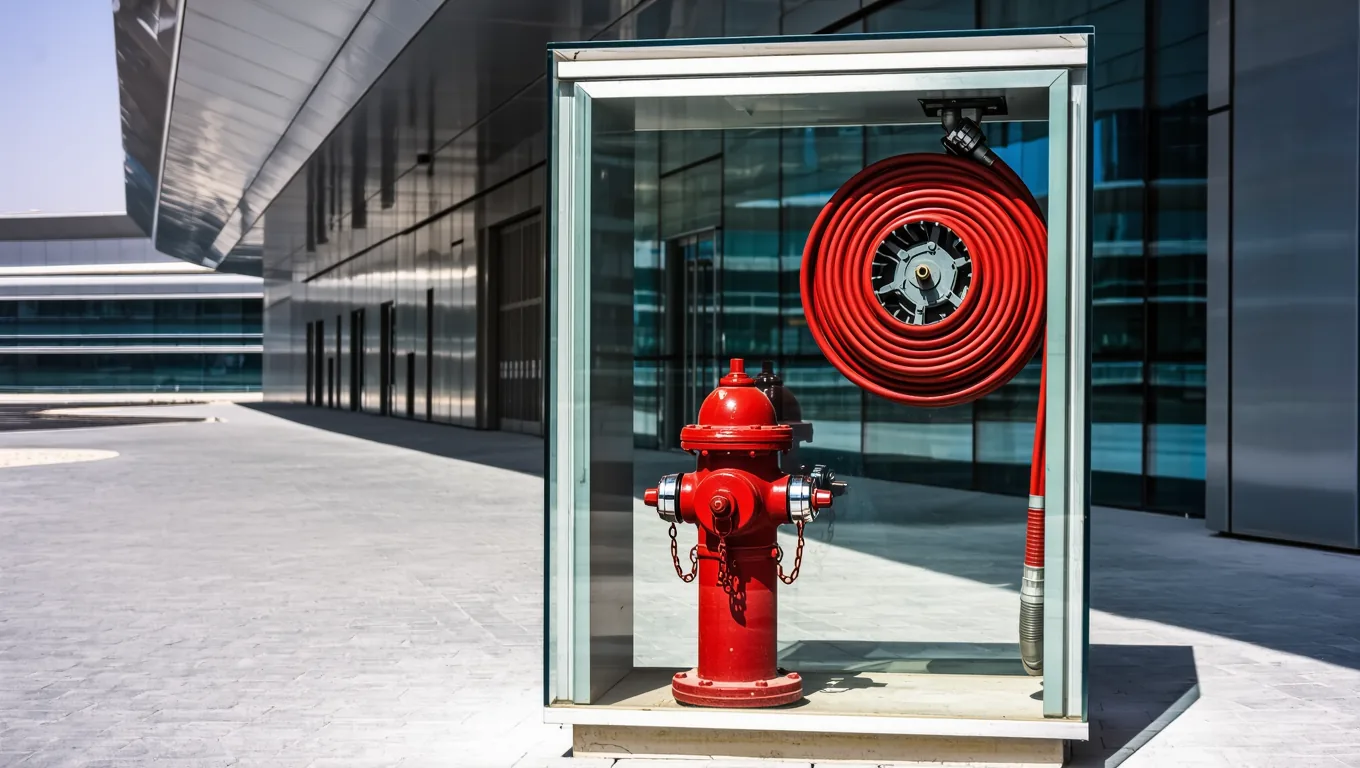
The Water Network, Part by Part
It helps to split the three parts. Each has its own job:
- Fire hydrants are high-flow outlets, usually outside, for the brigade and firefighting hoses.
- Hose reels are reels of small hose for people to fight a small fire early.
- Landing valves are outlets on a riser, often in the stairwell, where crews connect on each floor.
All three draw from the same supply. That supply often runs through the fire pump and tank. So they are best serviced together, not alone.
Fire Hydrant Maintenance
A hydrant is simple until you need it. Then a seized valve or a weak supply becomes a big problem. Care keeps it ready.
A normal cycle has a visual check every six months. Then a flow and pressure test once a year. The visual check looks at the valve, caps, outlets, paint, and access. The yearly test is the key one. The tech flows the hydrant. He notes the static and residual pressure. Then he compares it to the design figures.
A weak reading is a warning. It can mean a part-closed valve, a blocked supply, or a pump fault. Finding it on a test day beats finding it in a fire. The readings go in the logbook. The exact dates follow NFPA 24 and your fire strategy. So confirm them with a DCD-approved contractor.
Hose Reel Servicing
Hose reels are made for people. So they must be easy to use and reliable. Care checks the reel, the hose, the nozzle, the valve, and the flow.
The hose needs the most care. Over time, rubber can crack, dry out, or weaken. So hose reels are pressure-tested at set times. This proves the hose and fittings hold well above their working pressure with no leak. The exact test pressure and dates depend on the standard your system was built to. A good contractor will tell you which one applies.
Common hose reel faults:
- Cracked or dried hose
- A stiff or leaking valve
- A blocked or missing nozzle
- The reel blocked by stock
- Missing signs or a blocked cabinet
Landing Valves and Risers
Landing valves are part of the riser. The riser serves tall towers. In Dubai, with so many high-rise blocks, they matter a lot.
Each landing valve is checked for working order, leaks, caps, and pressure. On a wet riser, water is always there. So pressure is watched. On a dry riser, the brigade fills it on arrival. So the inlet, valves, and air seal are the focus. These checks run on a cycle, often every six months. The records are kept for inspection.
Keep It Together, Keep It Recorded
Hydrants, hose reels, and landing valves share one supply. Service them as a set, with the pump and sprinklers, and you get a clearer view. You also get a cleaner record. That is why they fit well in a fire fighting AMC or a wider fire systems AMC.
As with every fire system in Dubai, records matter as much as the work. DCD wants dated reports, flow and pressure readings, test results, and defect notes. A serviced network with no logbook is treated as unproven. Every visit should leave a clear report.
Explore the Fire Water Network Cluster
Each page below goes deeper on one part of the Dubai fire water network.
For broader services, see QSERV's Fire Systems AMC Dubai page.
Frequently Asked Questions
Q: How often should a fire hydrant be tested in Dubai?
A common pattern is a visual check every six months. Then a flow and pressure test once a year, with the readings written down. The exact dates come from your fire strategy and Civil Defence rules. The yearly test proves the hydrant still gives the flow and pressure the system was built for.
Q: Do fire hose reels need hydrostatic testing?
Yes. Hose reels are pressure-tested at set times. This proves the hose and fittings hold well above their working pressure with no leak or burst. The exact pressure and dates follow the standard your system was built to. Confirm the rule for your building with a DCD-approved contractor.
Q: What is a landing valve?
It is the outlet on a wet or dry riser, often in the stairwell. The brigade or building team connects a hose to it. It is checked for working order, leaks, caps, and pressure. Landing valves are part of the riser and are tested on a cycle.
Q: Can hydrant and hose reel care be part of an AMC?
Yes. They fit inside a fire systems AMC with the pump and sprinklers, since they share one supply. QSERV maintains hydrants, landing valves, and hose reels for Dubai buildings. We do flow checks, pressure tests, and the records DCD expects.


