
If you need a fire evacuation drawing in Dubai, the short answer is this: you need a building-specific plan that shows how people move to safety during an emergency, and you need it prepared in a way that matches the actual layout of the property.
A generic template is not enough. The drawing should reflect the floor plan, exits, stairs, travel routes, emergency equipment, and the way occupants will realistically leave the space.
For offices, towers, warehouses, retail units, fit-out projects, and mixed-use buildings, the value of a good evacuation drawing is simple. It reduces confusion during an emergency and creates a clear reference for owners, tenants, facility teams, and approval reviewers.
In a city like Dubai, where buildings change use quickly and fit-outs can alter the interior layout, the drawing must stay aligned with the site, not just the original design package.
Summary: Route Ready
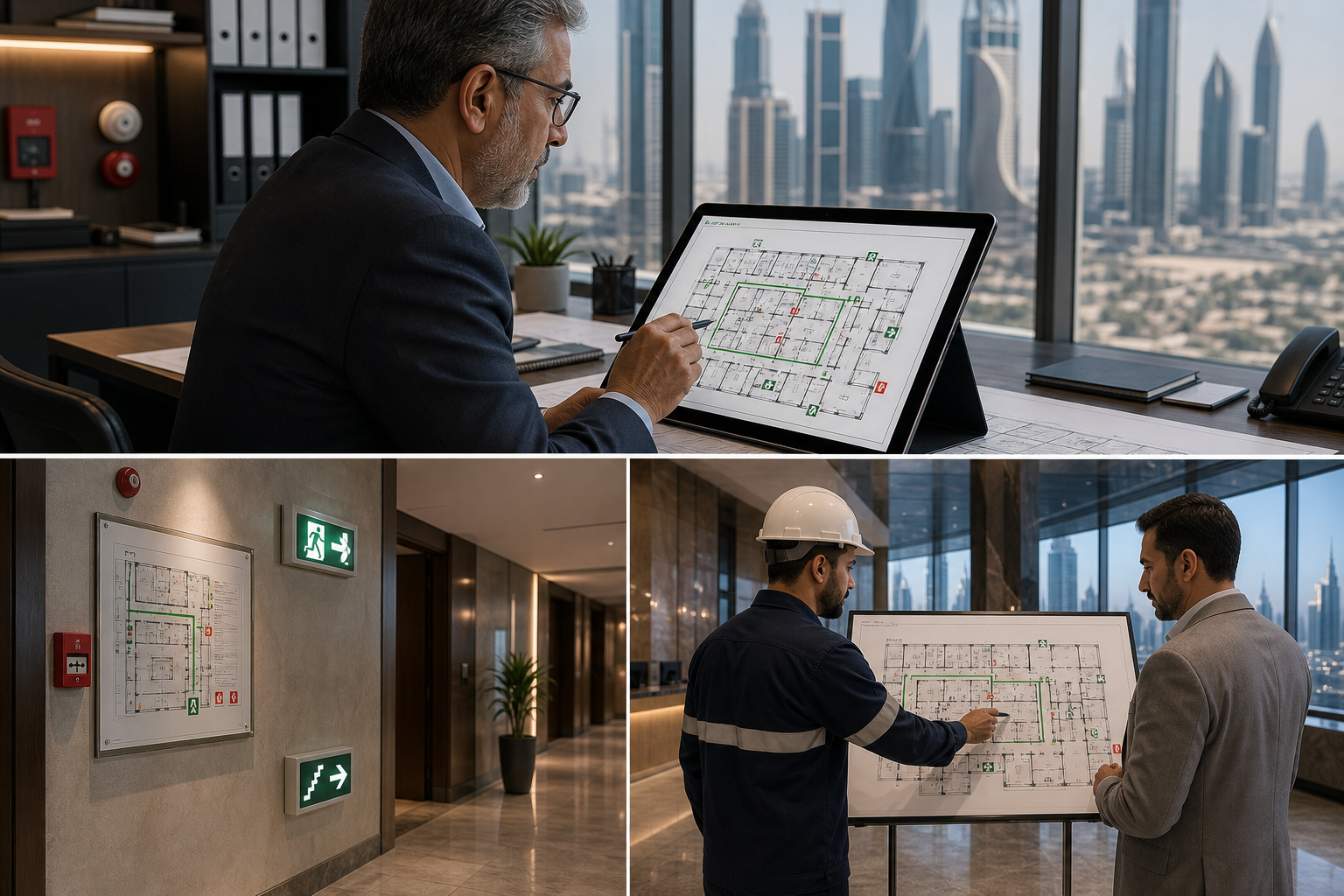
Quick Overview
- A fire evacuation drawing shows the safest exit route from each floor or area.
- The drawing should match the actual site, not a generic template.
- Dubai projects usually need the drawing to align with the wider compliance package.
- Offices, towers, warehouses, retail units, and fit-out projects are the main use cases.
- QSERV prepares the drawing as a practical handover document, not just a diagram.
What a Fire Evacuation Drawing Is
A fire evacuation drawing is a clear safety layout that explains how occupants should leave a building in an emergency.
It usually shows the escape route from each floor or area, exit doors, staircases, directional arrows, assembly guidance, and the position of important fire safety features that help people understand the route out.
The drawing is not meant to be decorative. It is a practical communication tool. When someone new enters the building, or when staff members need a quick reference during a drill, the drawing should make the route obvious at a glance.
When the plan is prepared properly, it supports both day-to-day safety awareness and compliance records.
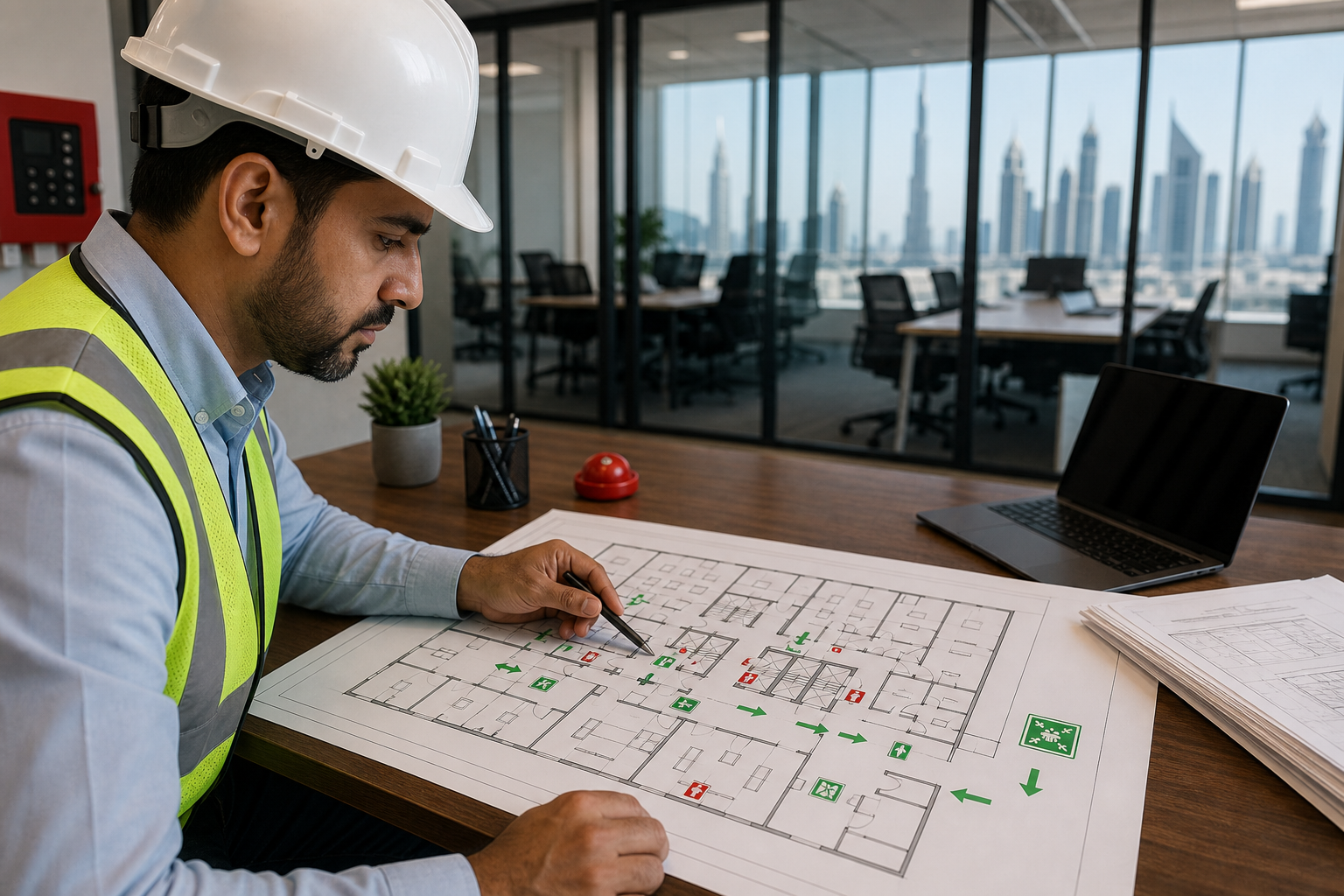
2D Drawing Support
A 2D fire evacuation drawing is the version most people expect first. It shows the building from above in a clear flat plan, with walls, exits, stairs, arrows, and emergency points laid out so the route is easy to follow.
For Dubai projects, that clarity matters because owners, tenants, and reviewers often need a quick way to understand the escape logic without reading a long explanation.
The strongest 2D drawings are not overloaded. They focus on the path out, the key safety symbols, and the floor-specific details that help the plan remain useful after handover.
That is why a site-based 2D drawing is usually the starting point for compliance work, occupant guidance, and file records.
3D Drawing Support
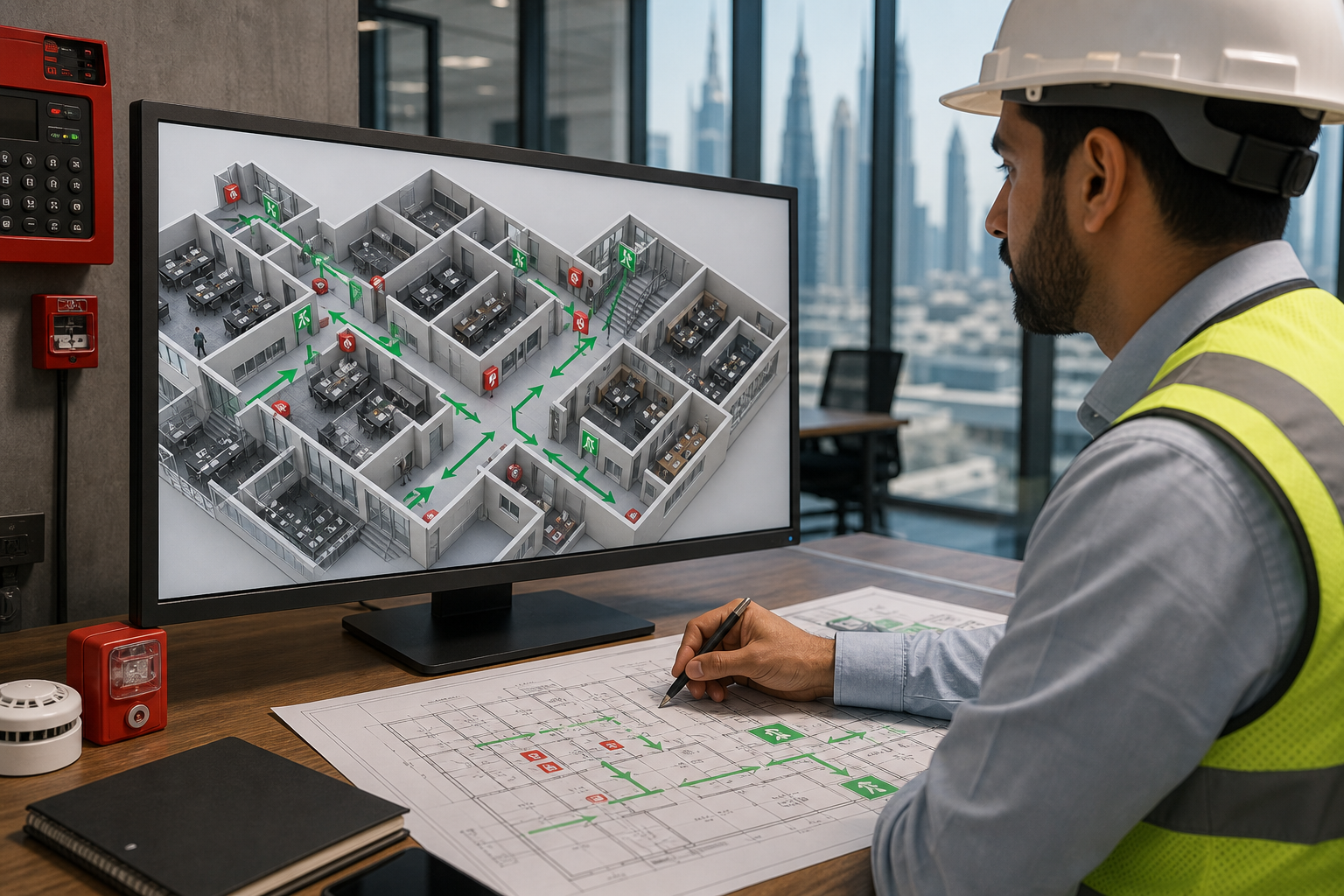
A 3D fire evacuation drawing adds context. Instead of showing only the flat layout, it helps people see how the route sits inside the building volume, where the stairs connect, and how equipment or partitions shape the escape path.
This is especially helpful during fit-out planning, stakeholder reviews, and early coordination when a client needs to understand the plan before it is filed or handed over.
In Dubai, 3D drawings are useful when a project has multiple levels, complex circulation, or a layout that is easier to explain with depth and perspective. They do not replace the 2D drawing.
They support it by making the route easier to visualise for teams that are not looking at plans every day.
Why It Matters in Dubai
In Dubai, evacuation drawings are commonly part of the wider compliance and safety documentation expected for occupied premises, fit-out works, and building management records.
The exact approval path depends on the building type, use, and current authority process, so the drawing should always be aligned with the latest submission requirements for the project.
That does not make the drawing any less important. In fact, it becomes more important because Dubai properties often have a mix of tenants, changing floor layouts, fast-moving fit-outs, and high occupancy.
A drawing that reflects the real conditions of the site helps the facility team stay organised and gives reviewers a clearer picture of how the building handles emergency egress.
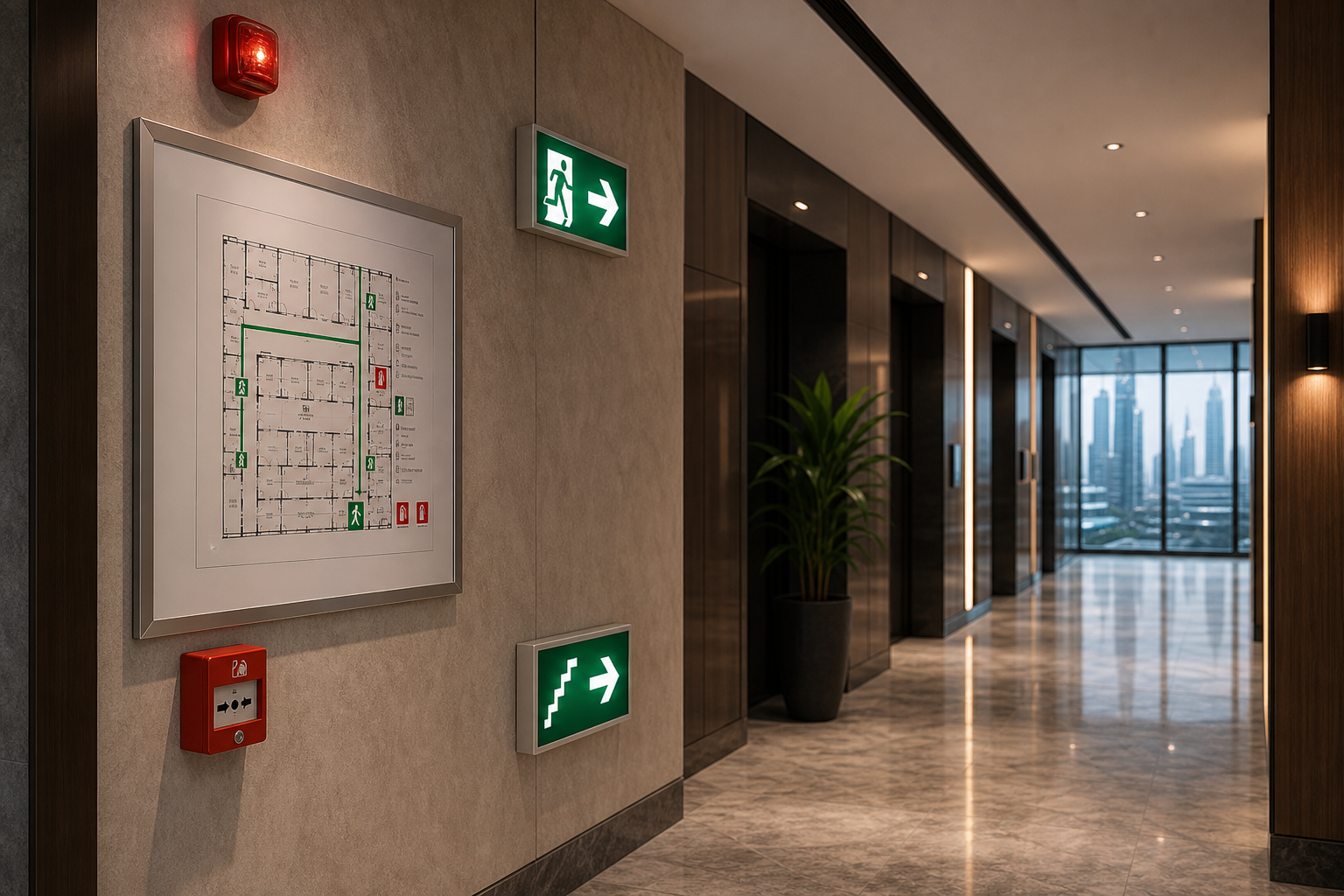
For many projects, the drawing is also part of a broader compliance conversation. It sits beside fire alarm systems, fire extinguishers, emergency lighting, exit signage, and maintenance records. When the full package is consistent, the building presents a more professional and safer profile.
DCD Compliance Requirements
A compliant evacuation drawing should be readable, site-based, and easy to understand.
The exact format and submission requirements can vary, but the core expectation is always the same: the drawing must show a safe route out of the building and it must match the actual floor plan.
At minimum, the drawing should be checked for:
- Correct floor or area layout
- Clear exit and stair locations
- Directional arrows that make the route obvious
- Consistent symbols and a clear legend
- Visible emergency notes where needed
- A layout that matches the current use of the space
If a building has been subdivided, extended, or reconfigured, the evacuation drawing should be reviewed again before it is treated as final.
That is especially important in offices, warehouses, clinics, and retail units where the internal layout can change more often than the base building itself.

What Our Drawing Includes
QSERV prepares evacuation drawings as a site-based compliance document, not a generic diagram. That means we start with the actual floor conditions and build the drawing around the real path people will use when they need to leave quickly.
Our drawings typically include:
- Floor-specific escape routes
- Exit doors and stair access
- Direction of travel
- Safety legend and symbols
- Assembly point guidance where applicable
- Notes that help facility teams explain the plan to occupants
Depending on the project, the drawing may also need to sit alongside related fire safety documents, such as fire alarm layouts, extinguisher locations, emergency lighting records, or a broader compliance pack. The goal is not just to submit a file.
The goal is to leave the building team with a plan that makes sense in real use.
The Process: Site Visit, Design, Review, Submission
The best results come from a simple, disciplined process.
First, the site is reviewed so the drawing reflects the actual floor condition. That matters because even small changes such as extra partitions, relocated doors, or furniture-heavy corridors can affect the clarity of the evacuation route.
A drawing that is based on assumption usually causes more revision later.
Second, the layout is drafted with clear routes, exit logic, and symbols that the building team can read quickly. This stage is where clarity matters most. If a route is difficult to follow on paper, it will be even harder to explain during an emergency.
Third, the drawing is checked against the project brief and the approval requirements. This is where revisions happen. For compliance work, revision is normal. The point is to make the plan accurate before it is treated as final.
The approval checklist can vary by building use and authority process, so the final pack should be reviewed carefully before submission.
Finally, the drawing is handed over as part of the project record so the owner or facility manager can keep it with other fire safety documents. When the drawing is integrated properly, it becomes a practical reference instead of a forgotten attachment.
Where It Is Required
Fire evacuation drawings are relevant anywhere people need a clear escape path. In Dubai, that commonly means:
- Office floors and business centres
- Residential towers and apartments
- Warehouses and logistics units
- Retail stores and shopping units
- Clinics, schools, and hospitality spaces
- Fit-out projects and tenancy handovers
The bigger the building, the more important the clarity of the drawing becomes. In a warehouse, the route needs to be easy to read from a distance. In an office tower, the drawing needs to make sense for staff, visitors, and maintenance teams.
In a retail unit, it needs to sit naturally within the layout without confusing the customer journey.
Documents, Timeline, and Handover
The most useful evacuation drawing packages start with the current floor plan, a site visit or site photos, and a clear understanding of how the building is actually used.
If the layout has changed after a fit-out or tenancy update, that change needs to be reflected before the drawing is treated as final.
For smaller sites, the drawing can often move quickly from site review to draft to handover. Larger buildings usually need more revision because there are more routes, more exits, and more coordination points to check. The key is not speed alone.
The key is accuracy, readability, and consistency with the wider fire safety file.
At handover, the building team should receive a drawing that is easy to store, easy to explain, and easy to update when the site changes again. That keeps the document useful long after the first submission.
Why Choose QSERV
QSERV works across fire safety and compliance projects in Dubai, so the drawing is prepared with the bigger safety picture in mind. That matters because a fire evacuation drawing does not exist on its own.
It sits beside alarm systems, firefighting equipment, maintenance schedules, and compliance records.
If you already work with QSERV for related fire protection needs, the advantage is consistency. The drawing can be reviewed alongside your fire alarm installation, your maintenance contract, and your wider documentation set.
That helps keep the project cleaner and reduces the chance of mixed information across different documents.
Related services:
Final Takeaway
A good fire evacuation drawing in Dubai should do one thing very well: help people get out safely and help the building team keep the documentation accurate. The plan should be clear, site-based, and aligned with the current layout of the property.
If the building changes, the drawing should change with it.
For property owners, facility managers, and fit-out teams, the safest approach is to keep the evacuation drawing connected to the rest of the fire safety file.
That means reviewing it when layouts change, checking it against the current compliance route, and updating it when the building use shifts. When the drawing is treated as a live document rather than a one-time task, it stays useful.
If you need support preparing a fire evacuation drawing in Dubai, QSERV can help with the layout, the compliance review, and the wider fire safety context around the project.
Explore the Evacuation Drawing Cluster
Each page below goes deeper on one part of evacuation and egress planning.
For broader services, see QSERV's Fire Systems AMC Dubai page.
Frequently Asked Questions
Q: Is a fire evacuation drawing mandatory in Dubai?
- Often required for occupied buildings, fit-outs, and compliance submissions.
- Exact requirement depends on building use, occupancy, and the authority path attached to the project.
Q: What should be included in an evacuation plan?
- Exits, escape routes, and stair access.
- Direction of travel and assembly guidance.
- Fire alarm points and relevant safety equipment.
- Floor-specific notes that help occupants leave safely and quickly.
Q: How do you get DCD approval for evacuation drawings?
- Start with a site visit and measured layout review.
- Prepare the drawing and complete an internal quality check.
- Revise the plan if needed and submit through the relevant approval path.
- Match the current submission expectations of the project.
Q: What documents are required for an evacuation drawing?
- The current floor plan or layout.
- Site photos or access to the premises for checking routes.
- Any relevant fit-out, tenancy, or amendment information.
- Existing fire safety references if the building already has them.
Q: How long does a fire evacuation drawing take?
- Small sites can move quickly if the layout is simple and current.
- Larger buildings usually need more checking and revision.
- The timeline depends on access, scope, and approval complexity.
Q: How much does a fire evacuation drawing cost in Dubai?
- Pricing depends on floor count, layout complexity, and site access.
- Revision rounds and compliance scope also affect the cost.
- The most accurate price comes after a quick review of the site and scope.
Q: What is the difference between 2D and 3D fire evacuation drawings?
- 2D drawings show the flat floor plan, exits, routes, and symbols.
- 3D drawings add depth and building context so the route is easier to visualise.
- Most projects use both together, with 2D for compliance clarity and 3D for coordination.


